
- by seodrmode
How to Clean Nail Clippers at Home: Easy Steps to Disinfect
- by seodrmode
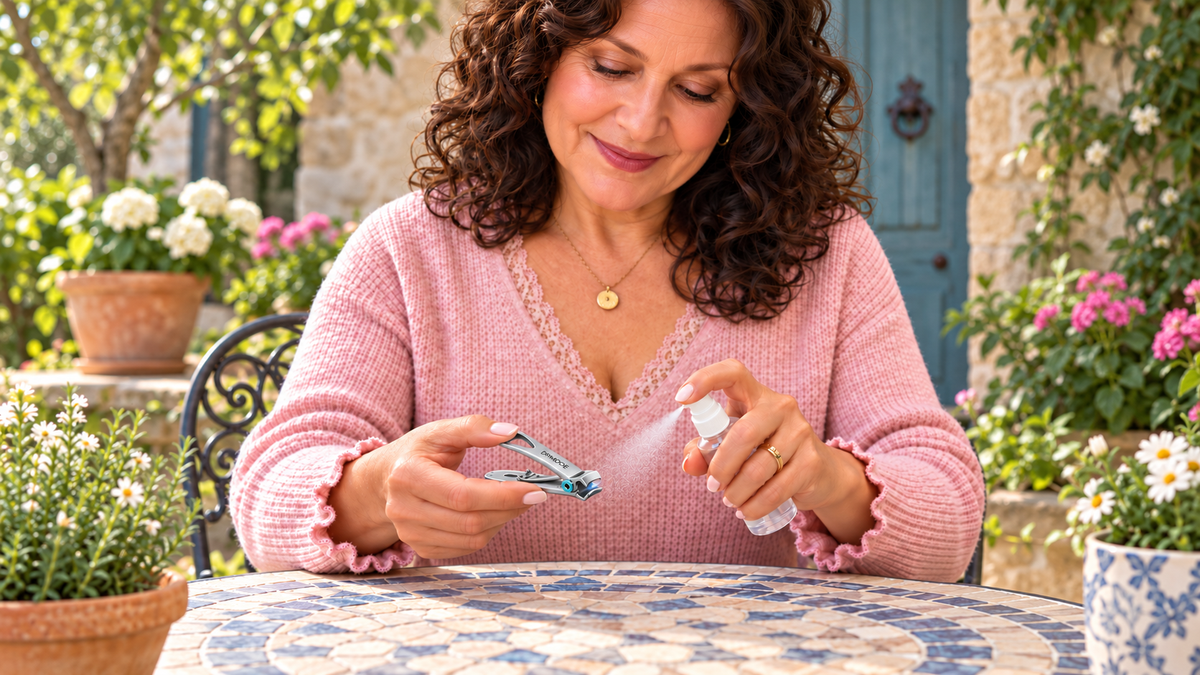
Think a quick spritz of rubbing alcohol is enough? Learning how to clean nail clippers starts with more than a spray. Nail clippings, skin flakes, oil, and moisture can collect around the blades and hinge. If residue remains, germs may stay on the tool.
In this guide, you’ll learn how to clean nail clippers at home, when to disinfect nail clippers, and how to dry and store them properly.
Nail clippers touch nail plates, skin, and sometimes the area beneath the free edge of the nail. Small fragments can become trapped in the cutting edges, hinge, spring, or file area.
Sharing unclean nail clippers may transfer contamination between people. If someone in your household has a suspected fungal nail infection, keep that person’s tools separate and clean them carefully after use.
Cleaning also helps you inspect and maintain the tool. Remove trapped debris, check that the mechanism moves smoothly.
Here’s what these terms mean for your clippers:
For your home routine, start by removing the debris. Then use a disinfectant when needed, let the clipper dry completely, and put it away in a clean case.
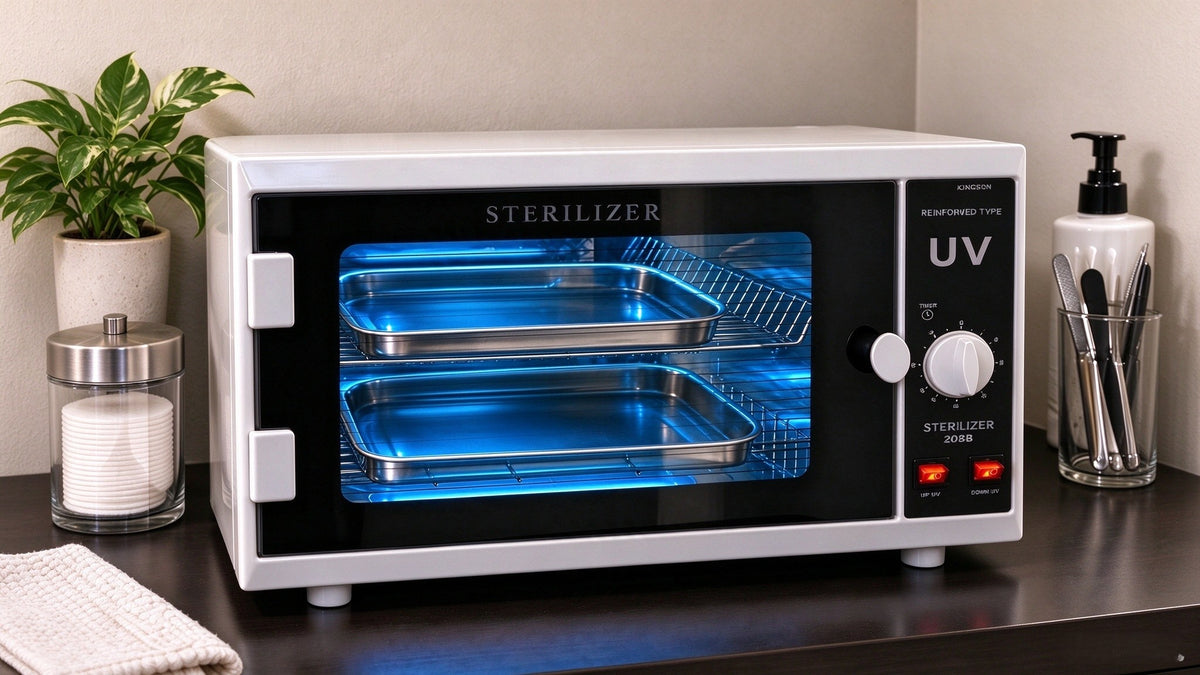
A commercial nail clipper cleaner may be useful, but check whether it is designed to clean, sanitize, or disinfect. Those functions are not interchangeable.
For a manual clipper with plain metal parts, these are three options to consider. Check the clipper’s care instructions first, especially if it has plating, a colored coating, rubber grips, or glued components.
| Disinfectant | Key Advantage | Mixing & Contact Time |
|---|---|---|
| 70% Alcohol Isopropyl alcohol |
Generally noncorrosive to metal May affect plastics, rubber, adhesives, and finishes. |
Follow the product label. Choose a product labeled for your intended tool or surface use, and follow its stated contact time. |
| BARBICIDE Original Concentrate |
Anti-rust formula For compatible hard, nonporous tools. |
2 US fl oz concentrate + 32 US fl oz water. 10 minutes of full immersion. Rinse and dry completely afterward. |
| LUCAS-CIDE Pink or blue Concentrate |
pH-neutral formula Made for soaking compatible nail tools. |
½ US fl oz concentrate + 1 US gallon water. 10 minutes of contact. Follow the bottle’s rinsing directions, then dry completely. |
Protect the metal by measuring accurately, removing the tool when the contact time ends, and drying it fully. Do not leave it soaking overnight. Household bleach can corrode metal, so it is not our first choice for routine clipper care. Never mix disinfectants.
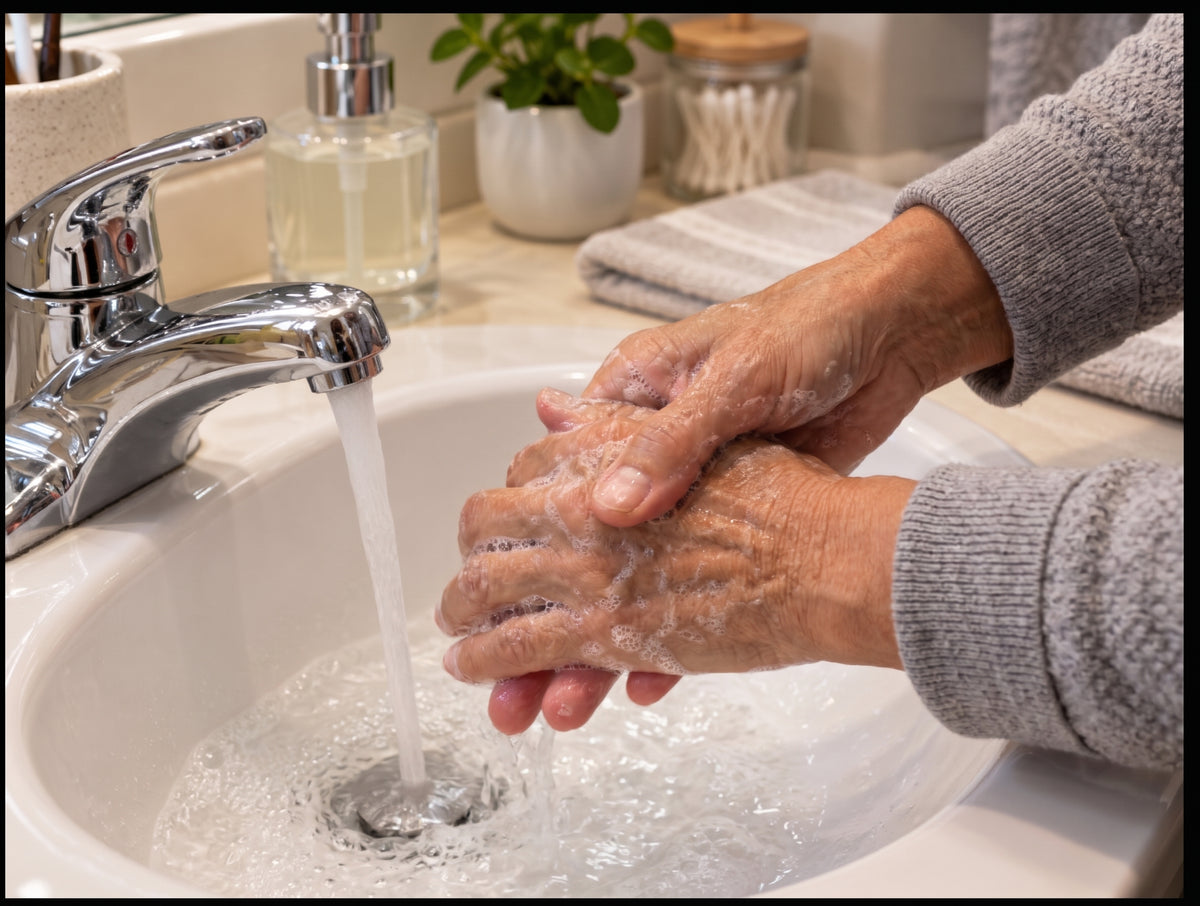
Wash your hands. Check for chipped blades,loose parts, or deep rust; replace damaged clippers.
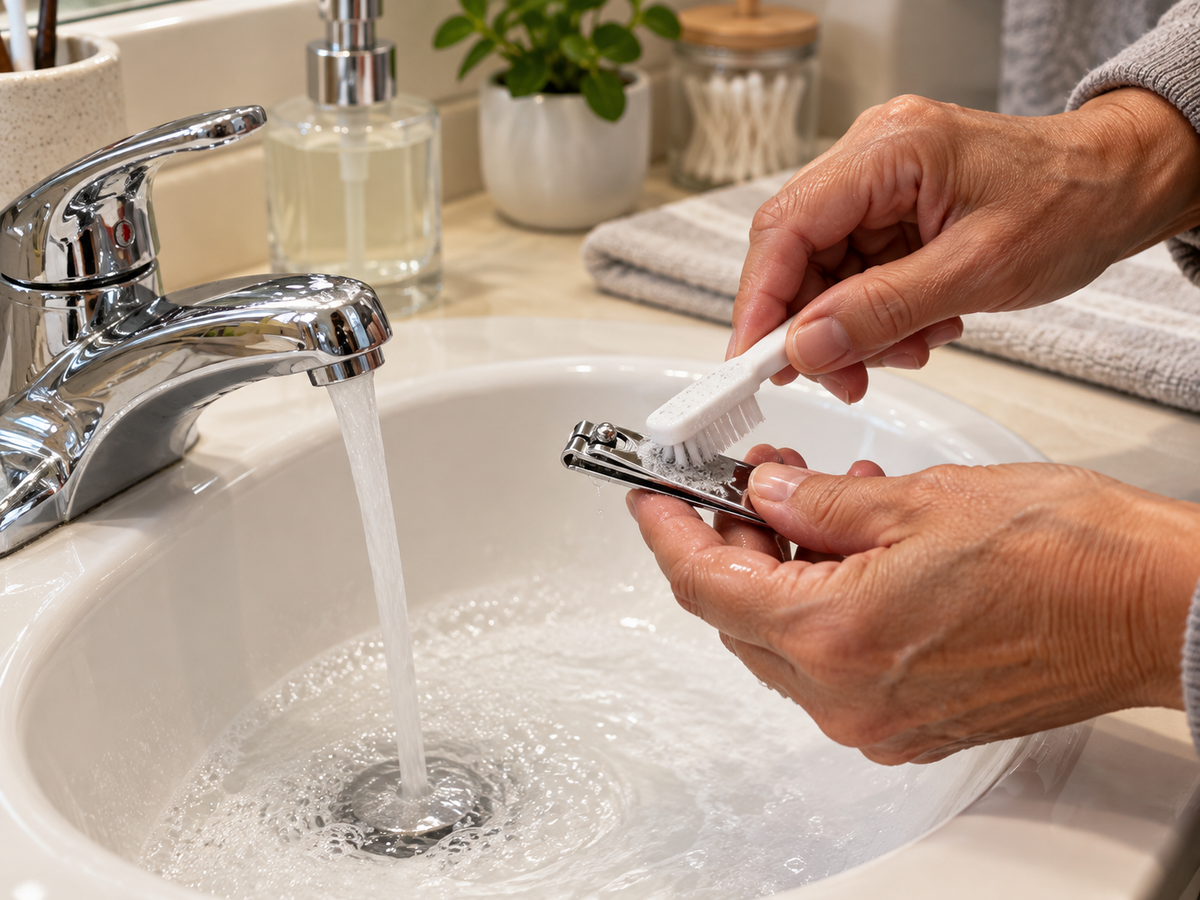
Brush away nail fragments and skin flakes, especially around the hinge and between the blades.
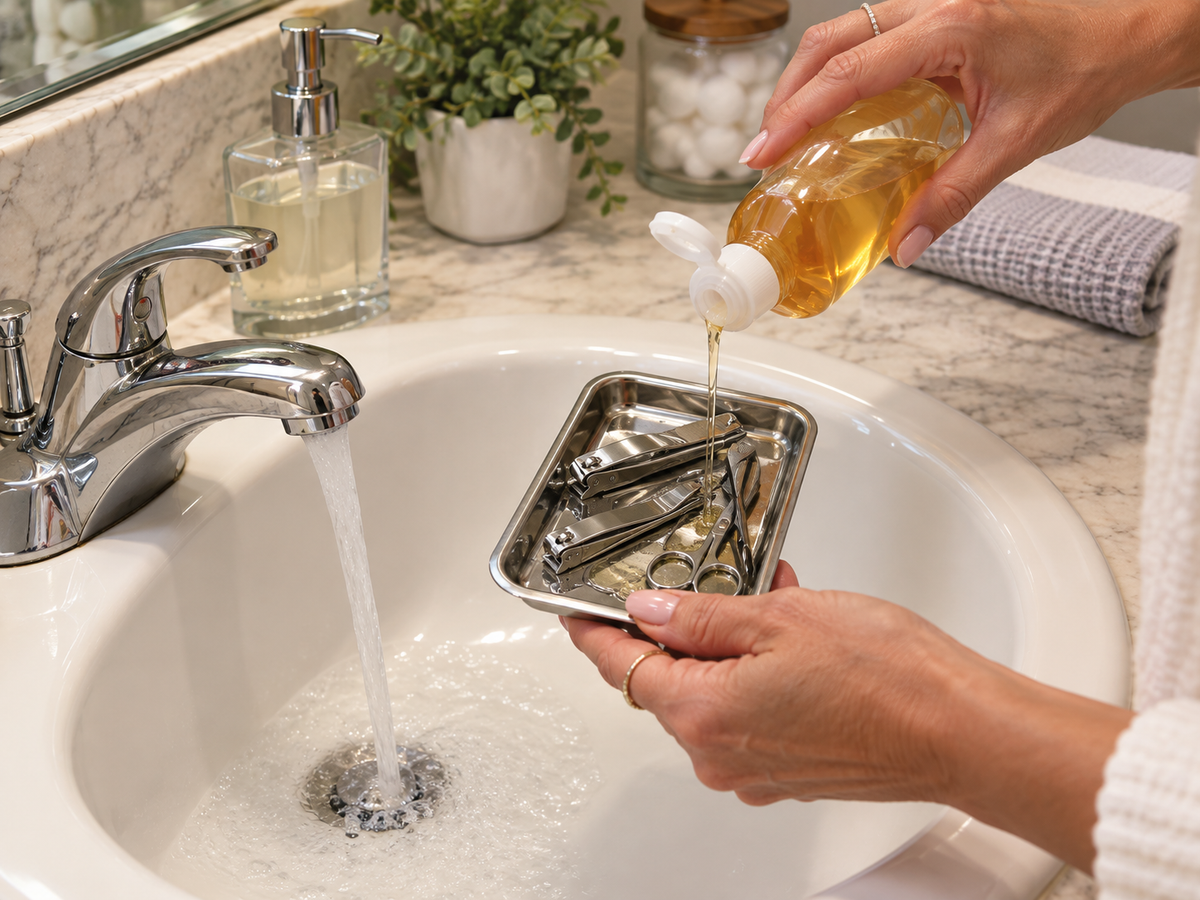
Scrub with mild soap and warm water. Rinse well, then dry as directed before disinfection.
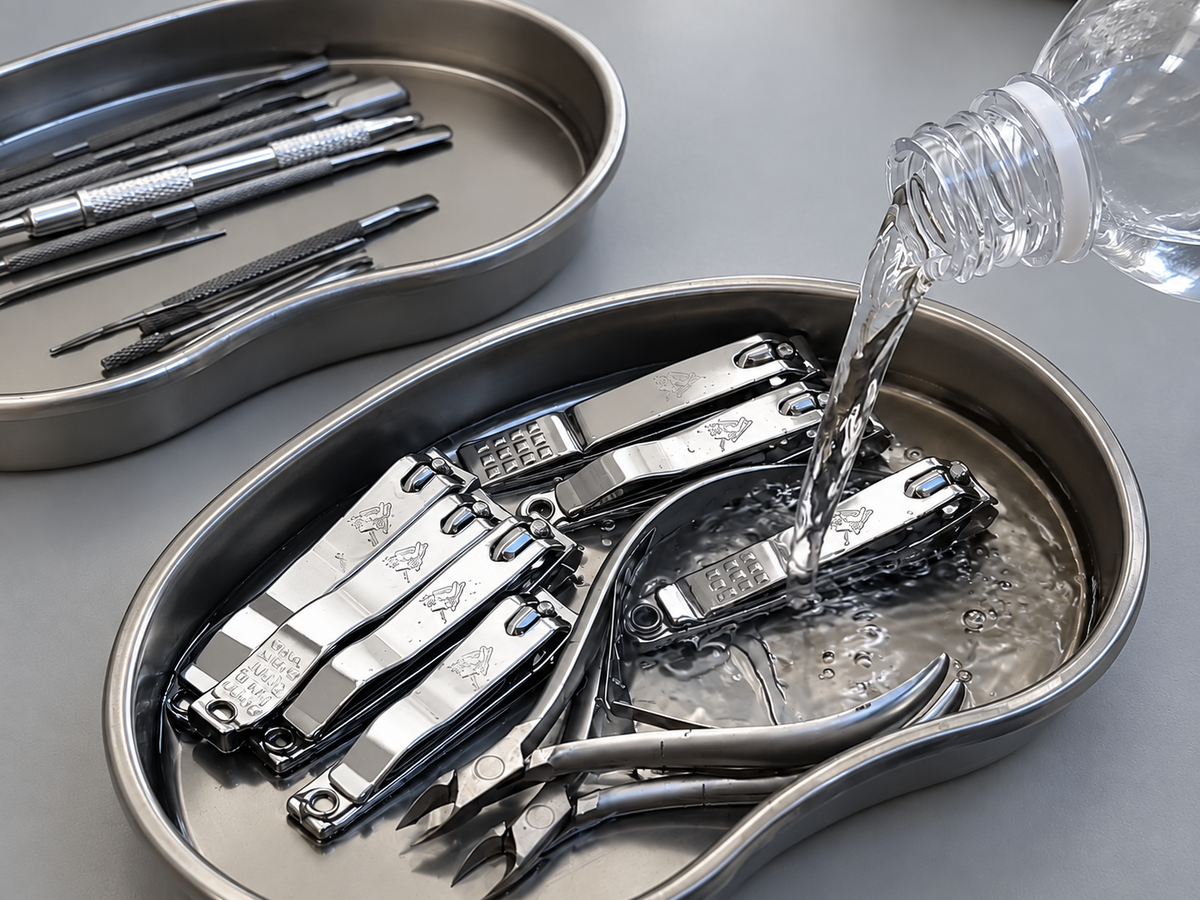
Brush away nail fragments and skin flakes, especially around the hinge and between the blades.
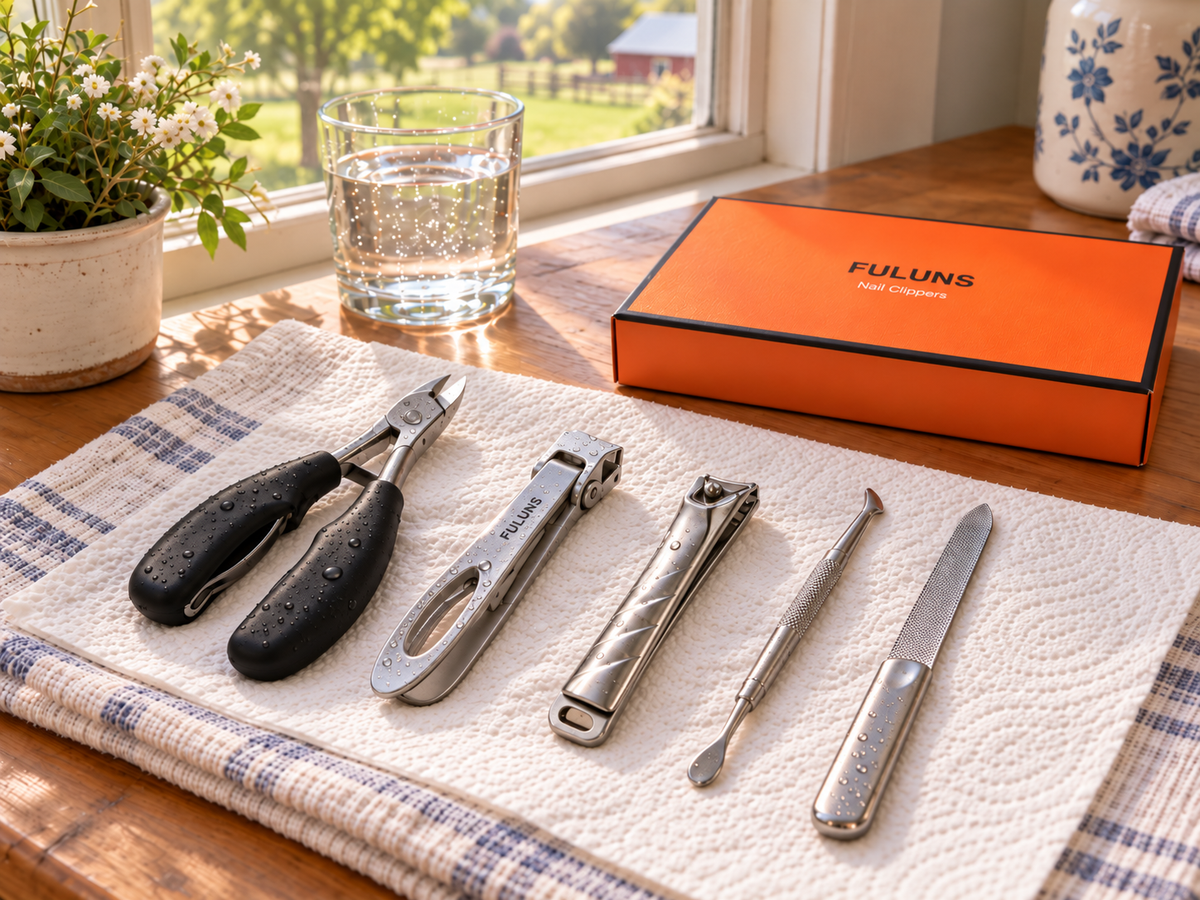
Dry the blades and hinge completely. Store in a clean, dry case.
Remove nail debris before applying a tool-compatible disinfectant for its full labeled contact time. A 2018 study detected hepatitis B virus (HBV) DNA on nail scissors and in nail specimens, reinforcing the importance of proper hygiene and keeping nail tools personal.
| Sample / condition | HBV DNA finding | Study context |
|---|---|---|
| Nail scissors | 27%Tested positive | Scissors used by 63 patients with detectable serum HBV DNA. |
| Nail specimens | 50%Tested positive | Nail specimens collected from the same 63 patients. |
| Higher serum HBV DNA | 71.8%Reported probability of tool positivity | When serum HBV DNA was >105 IU/mL, the reported probability of detecting HBV DNA on nail scissors was 71.8% (P < .05). |
Study context: These findings concern HBV DNA detection in a selected patient group. They do not describe all household nail tools; 71.8% is not an infection probability. DNA detection alone does not establish infectivity or transmission.
Source: Koroglu et al. American Journal of Infection Control. 2018;46(7):793–797. Read the study on PubMed. DOI: 10.1016/j.ajic.2017.12.009.
Our DRMODE Best Nail Clippers feature martensitic stainless steel with a ceramic surface treatment designed to help resist corrosion.Proper cleaning and disinfection help remove residue and reduce bacteria on the surface.

Alcohol has activity against some fungi, but its effectiveness depends on the product and how it is used.
Effectiveness depends on the product’s formulation, intended use, and contact time. Choose a product with the appropriate label claim and follow its directions. A quick spray and immediate wipe is not a reliable substitute.
Boiling may reduce germs, but it cannot reliably guarantee that nail clippers are sterile.
Heat may also damage plastic parts, coatings, or adhesives. For a compatible manual metal clipper, use the cleaning and timed disinfection routine above. True sterilization generally needs professional equipment and a controlled process.
A nail clipper cleaner can remove debris, but it may not disinfect the tool.
Check the product’s label and use a suitable disinfectant when the situation requires it.
LUCAS-CIDE Concentrate is another disinfectant option for compatible nail tools.
Follow the specific product label for dilution, contact time, and aftercare. Use it only with compatible tools.
Dry nail clippers completely and store them in a clean, dry case.
Before putting them away, check the cutting edges and hinge for any remaining debris.